BMW has spent the last 50 years perfecting icons like the 3 Series — cars that define their segments through relentless iteration and engineering discipline. But that same philosophy hasn’t been limited to four wheels. More learned BMW fans are no doubt acutely aware that motorcycles are an inextricable part of BMW’s history. And running parallel with the 3 Series is a lesser-known story: BMW Motorrad’s helmet program. It evolved over the same half-century with a similar focus on innovation, safety, and real-world usability.
BMW Motorrad’s Helmet Evolution: 50 Years of Progress
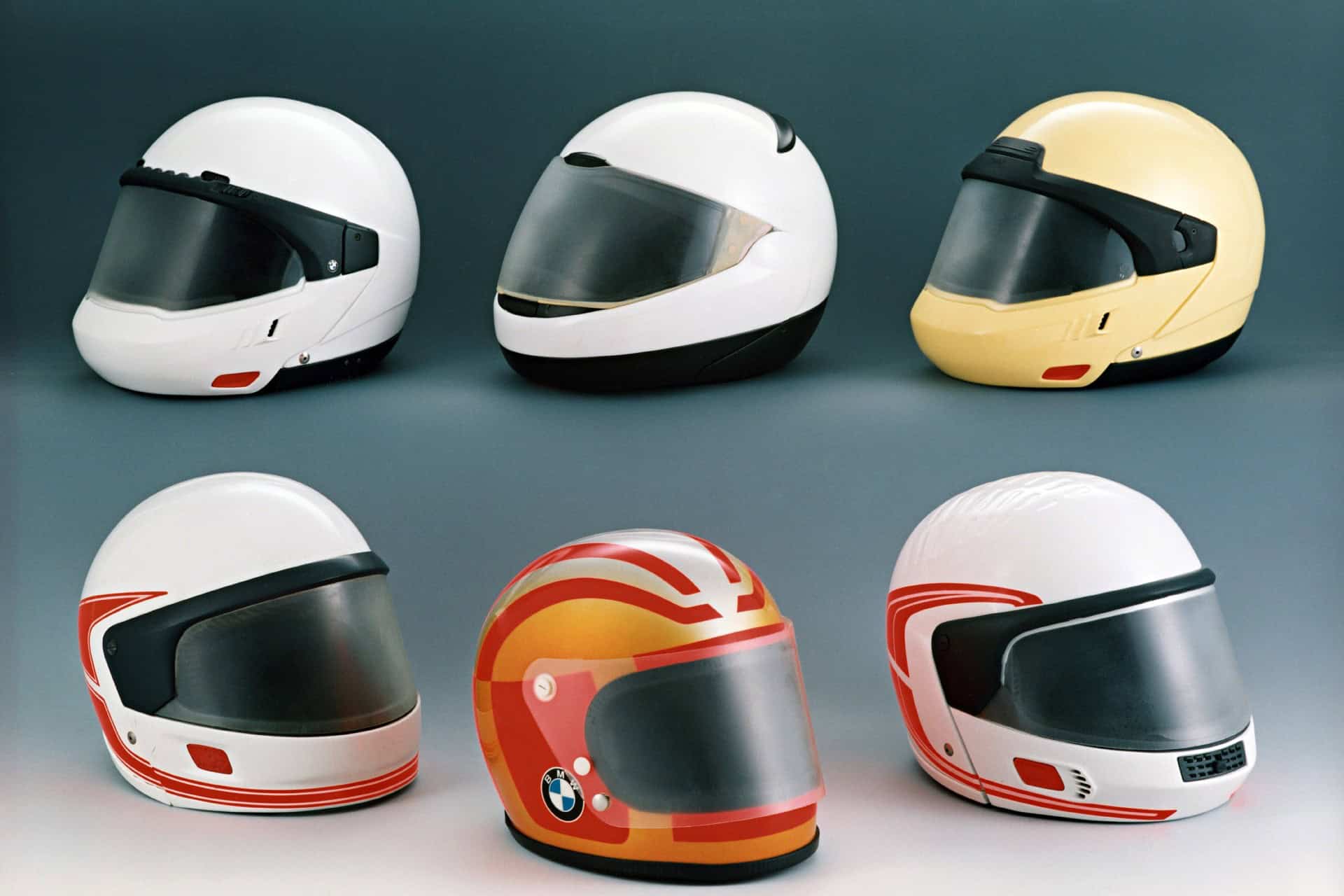
It all started in 1975 with BMW’s first full-face helmet, developed in collaboration with Römer. Even by modern standards, it was forward-thinking: lightweight glass-fiber construction, integrated sun visor, and an emphasis on visibility and aerodynamics. At a time when helmet tech was still relatively basic, BMW’s approach already reflected the same engineering-led philosophy that defined its cars. From there, the trajectory was clear. The introduction of the first “System Helmet” in 1981 marked a pivotal shift. Not just for BMW, but for the entire industry. Its removable chin bar created a new level of versatility, allowing riders to transition between full-face protection and open-face convenience. That modular concept would become a defining feature of BMW Motorrad helmets for decades.

Through the 1980s and 1990s, BMW steadily refined the formula. Each new generation improved aerodynamics, reduced wind noise, and enhanced ventilation. Like cars, helmet production often requires extensive wind tunnel development. By the time the System Helmet 4 arrived in the late ’90s, materials like Kevlar and carbon composites were being introduced, signaling a clear move toward high-performance construction.
The real leap into modernity has come in more recent years. Carbon fiber shells, integrated communication systems, and advanced safety standards like ECE 22-05 — and now ECE 22-06 — pushed BMW’s helmets to even greater heights. The latest System Helmet 8 and System Helmet 8 Carbon represent the culmination of that evolution, combining lightweight composite shells with features like dual-pane visors, optimized aerodynamics, and optional MIPS technology to reduce rotational forces during impacts.

What sticks most isn’t necessarily the incremental progress, but the consistency. BMW Motorrad has approached helmets the same way it approaches its vehicles. That is, with iterative refinement, real-world usability, and a willingness to adopt new materials and safety concepts early. And, of course, an unflinching and uncompromising attention to performance. Fifty years on, BMW helmets are more than just accessories. They’re part of a parallel engineering program — one that mirrors the brand’s finest machines. Such as its contemporary, the BMW 3 Series. And if the jump from the original “Römer helmet” to today’s System 8 Carbon is any indication, the next 50 years will likely be just as methodical and ambitious.