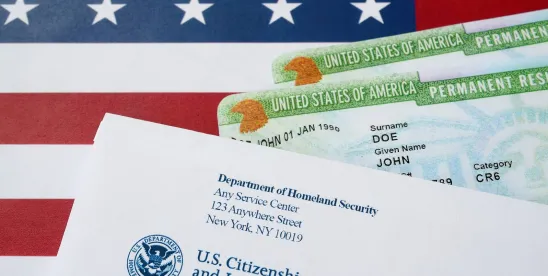
International medical graduates (IMGs), physicians who attended medical school outside the United States or Canada, make up about one-quarter of the physician workforce currently practicing in the United States. Permanent residency allows foreign-born physicians to build long-term careers, practice independently, and serve communities with limited access to healthcare.
The green card process, however, can be complex and time-consuming. Policy revisions introduce procedural uncertainty. Processing timelines often extend across years. Physicians born in certain countries like China and India may face wait times that stretch beyond a decade because of annual visa limits.
Colombo & Hurd has helped clients from more than 100 countries navigate the permanent residency process. Our founding partners and attorneys, many of whom are immigrants themselves, understand the professional and personal consequences when career advancement and long-term planning depend on immigration outcomes.
This guide examines the various employment-based green card pathways for physicians, including eligibility requirements, timelines, and strategic considerations.
Ready to Explore Your EB-2 NIW Eligibility?
Get a Free Profile Evaluation
Real Success Stories: Doctors Who Secured Approvals
Below are several recent approvals for doctors seeking permanent residency through pathways such as the EB-2 NIW for doctors and EB-1A Extraordinary Ability:
A cardiothoracic surgeon from Nigeria secured EB-2 NIW approval in just 6 months and 21 days without a Request for Evidence (RFE). USCIS recognized the national importance of his work integrating artificial intelligence into cardiovascular medicine. With more than 15 years of surgical, academic, and research experience, he proposed using AI-driven diagnostics, predictive analytics, and clinician training programs to improve cardiac care across U.S. hospitals. Colombo & Hurd’s legal team structured the petition to demonstrate both the clinical impact and technological innovation of his work, aligning his surgical leadership, AI training, publications, and collaborations with U.S. research and medical institutions.
USCIS approved the petition under premium processing, confirming that his initiative to combine advanced surgical expertise with artificial intelligence could meaningfully strengthen cardiovascular care and patient outcomes in the United States.
Read the full case study here: EB-2 NIW Case Study: Surgeon From Nigeria Approval In 6 Months And 21 Days, No RFE
A physician-scientist from Colombia specializing in cancer genetics obtained EB-1A Extraordinary Ability approval in just 14 days through premium processing with no Request for Evidence. With more than 16 years of experience in oncology and medical genetics, he built and led genetic testing programs that ensure the clinical accuracy and interpretation of hereditary cancer diagnostics used in patient care. Colombo & Hurd structured the petition to demonstrate sustained international recognition across seven EB-1A criteria, highlighting his leadership in genetic testing programs, peer-reviewed publications, awards, expert judging roles, and professional memberships.
By clearly contextualizing achievements earned across Latin America and demonstrating their real-world impact on oncology practice, the petition enabled USCIS to approve the case quickly, allowing the physician to continue advancing precision oncology and cancer genetics research in the United States.
Read the full case study here: EB-1A Case Study: Colombian Cancer Genetics Physician Secures USCIS Approval In 14 Days With No RFE
A hand and reconstructive surgeon from Germany secured EB-2 NIW approval after responding to a Request for Evidence (RFE). Her work advances surgical training in the United States. With extensive experience treating traumatic injuries, congenital conditions, and degenerative diseases affecting the hand, she proposed establishing structured training programs that provide hands-on instruction and mentorship to U.S. physicians in advanced reconstructive techniques. Colombo & Hurd’s legal team structured the petition to demonstrate how expanding specialized surgical education could strengthen physician training and improve patient outcomes nationwide.
USCIS approved the petition following a comprehensive RFE response that clarified the structure and national impact of the proposed training programs.
Read the full case study here: EB-2 NIW Case Study: German Hand Surgeon Establishing Surgical Training Programs in the United States
An internal medicine physician from Mexico secured EB-1A Extraordinary Ability approval in just 15 days through premium processing without a Request for Evidence (RFE). She has made sustained contributions to clinical care, medical education, and public health. With more than 25 years of experience in patient care and academic medicine, she has educated over 2,500 medical students and developed innovative treatment approaches during the COVID-19 pandemic that were adopted by other physicians. Since transitioning her practice to the United States, she has worked in a medically underserved region while contributing to research, medical training, and community-based health initiatives. Colombo & Hurd structured the petition to highlight her original clinical contributions, leadership in medical education, national media recognition, and long-term impact on healthcare delivery.
USCIS approved the petition, confirming that her work demonstrates extraordinary ability and contributes to strengthening healthcare access and medical training in the United States.
Read the full case study here: EB-1A Case Study: A Mexican Internal Medicine Physician Recognized for Advancing Care Where It Is Needed Most, No RFE
A physician from Venezuela secured EB-2 National Interest Waiver (NIW) approval without a Request for Evidence (RFE) based on her work improving pneumonia treatment and antibiotic stewardship in U.S. hospitals. With nearly 15 years of clinical experience in Venezuela and the United States, she has focused on strengthening pneumonia care through data-driven protocols that improve diagnostic accuracy, guide responsible antibiotic use, and reduce preventable complications. Colombo & Hurd structured the petition to demonstrate how her clinical initiatives, research collaborations, and hospital-based quality improvement projects contribute to addressing antimicrobial resistance, a major public health challenge in the United States.
USCIS approved the petition, confirming that her work advancing pneumonia management and responsible antibiotic practices carries substantial merit and national importance.
Read the full case study here: EB-2 NIW Case Study: Venezuelan Physician Approval, No RFE
Understanding Your Green Card Options as a Physician
Many foreign-trained physicians first explore a visa for doctors, such as a J-1 or H-1B. However, for long-term stability, a self-sponsored green card strategy may offer greater control.
The U.S. immigration system provides several employment-based pathways to permanent residency, including options used by physicians seeking a green card and other long-term visa options for doctors working in the United States. Each operates under distinct eligibility requirements and procedures, and the overall timeline depends heavily on petition processing and visa availability under the State Department’s Visa Bulletin, which varies by category and country of chargeability.
The Six Primary Pathways
The six primary green card pathways for physicians are outlined below:
| Pathway | Self-Petition | PERM Required | Service Commitment |
| EB-1A Extraordinary Ability | Yes | No | None |
| EB-1B Outstanding Professor or Researcher | No | No | None |
| EB-2 with PERM | No | Yes | None |
| EB-2 Physician NIW | Yes | No | 5 years full-time (or aggregate) in a designated shortage/underserved area or VA facility |
| Standard EB-2 NIW | Yes | No | None |
The appropriate pathway depends on your background, employment sponsorship options, country of chargeability, and timeline. Clinical physicians pursuing long-term independent practice often consider the Physician EB-2 NIW and employer-sponsored EB-2 (PERM) routes. In select “top-of-field” cases, EB-1A may also be an option. Physician-researchers and academic faculty often evaluate EB-1B, EB-1A, or the standard EB-2 NIW when their work shows national or international impact.
Ready to Explore Your EB-2 NIW Eligibility?
Get a Free Profile Evaluation
EB-2 Physician National Interest Waiver: The Primary Green Card Pathway for Doctors
The Physician EB-2 National Interest Waiver (NIW), created by the Nursing Relief for Disadvantaged Areas Act of 1999, is a statutory carve-out within the EB-2 category for physicians who agree to practice in designated shortage areas or at Veterans Affairs facilities. This pathway exists because many underserved communities struggle to recruit enough physicians.
Core Requirements
To qualify for the Physician NIW, you must commit to working full-time (generally defined as 40 hours per week) for five years at a facility located in a designated shortage area or at a Veterans Affairs (VA) facility:
- Health Professional Shortage Area (HPSA)
- Medically Underserved Area (MUA)
- Mental Health HPSA
You must also establish that you meet EB-2 threshold eligibility (advanced degree or exceptional ability), hold the appropriate state medical license (or be eligible for licensure), and have passed the required U.S. medical licensing examinations (USMLE steps or equivalent). English proficiency is generally inherent in licensure and examination requirements but is not a standalone statutory element of the Physician NIW. For long-term stability, a self-sponsored green card strategy may offer greater control.
Doctors face a unique challenge because practicing medicine in the United States typically requires a state medical license, which many foreign-trained physicians do not have. However, many states have introduced alternative licensure pathways for internationally trained physicians.
Licensing requirements do not close the door to an EB-2 NIW.
For a deeper look at how licensing reforms are opening new doors for foreign-trained physicians, see our article, EB-2 NIW and state licensing reforms for foreign doctors.
The petition must include a public interest attestation from a federal agency or a state department of health confirming that your work serves the public interest. This letter, combined with your employment contract and HPSA/MUA designation evidence, forms the foundation of your I-140 petition.
Timeline and Process
If the priority date is current, Form I-485 (Adjustment of Status) can be filed at the same time as Form I-140. Concurrent filing allows eligible applicants and their dependents to apply for Employment Authorization Documents (EADs) and Advance Parole; a spouse may independently apply for an EAD as a derivative beneficiary.
USCIS will not approve the I-485 until completion of the full five-year service commitment. Physicians must submit progress evidence at the second and sixth anniversaries of I-140 approval, followed by completion evidence within 120 days of finishing the required service period.
Processing times vary based on USCIS workload and individual case circumstances. I-140 processing times fluctuate, and while standard adjudication often ranges several months, premium processing is available for EB-2 NIW petitions and currently requires USCIS action within 45 business days. Premium processing only speeds up the I-140 decision. It does not affect visa backlogs or the five-year service requirement.
Important Distinctions
The Physician NIW differs fundamentally from the standard NIW pathway evaluated under Matter of Dhanasar. While purely clinical physicians may face evidentiary challenges under the Dhanasar framework, approval is possible where the proposed endeavor demonstrates national importance beyond routine patient care (for example, systemic healthcare impact, innovation, policy influence, or measurable public health outcomes).
The Physician NIW exists specifically for clinicians providing direct patient care in underserved areas. It bypasses the PERM labor certification process entirely and permits self-petition without employer dependency.
One critical limitation concerns portability. American Competitiveness in the Twenty-First Century Act (AC21) portability provisions do not apply in the same manner as standard EB-2 cases. A physician changing employers during the five-year service period must file a new Physician NIW petition; however, previously completed qualifying service time may be recaptured if properly documented and the new employment meets statutory requirements. Time in J-1 status does not count toward the five-year Physician NIW service requirement. Qualifying clinical service performed in H-1B or authorized employment status may count, provided all statutory conditions are met.
EB-1A: For Physicians with Extraordinary Achievements
The EB-1A classification can be one of the fastest green card pathways for physicians who demonstrate sustained national or international recognition. As the highest employment-based preference category, EB-1 is often current for many countries of chargeability; however, visa availability is governed by the State Department’s Visa Bulletin, and backlogs may apply for certain nationalities. This self-petition pathway requires no employer sponsorship and no labor certification.
Demonstrating Extraordinary Ability
Applicants must satisfy at least three of ten regulatory criteria, which include:
- Receipt of nationally or internationally recognized prizes or awards for excellence
- Membership in professional associations that require outstanding achievements as judged by recognized experts
- Published material about the physician in professional or major trade publications
- Participation as a judge of the work of others (such as peer review of journal articles, grant review, or conference abstract evaluation)
- Original scientific, scholarly, or clinical contributions of major significance to the field
- Authorship of scholarly articles in professional journals or major media
- Employment in a leading or critical role for distinguished organizations
- High salary or remuneration compared to others in the specialty
USCIS applies a two-tier analysis under the Kazarian v. USCIS framework. First, adjudicators evaluate whether the applicant meets at least three criteria (or presents comparable evidence, if applicable). Second, they assess whether the totality of evidence demonstrates that the applicant has risen to the very top of the specialty.
EB-1A Adjudication and Timeline
Adjudication trends fluctuate annually, and EB-1A petitions are subject to rigorous evidentiary review because they permit self-petition without employer sponsorship. Outcomes depend heavily on the strength, documentation, and objective impact of the evidence submitted.
When a visa number is available, Form I-485 (Adjustment of Status) may be filed concurrently with or after I-140 approval. For many countries, EB-1 priority dates are current. However, physicians born in certain countries, including India and China, may experience visa retrogression depending on current Visa Bulletin movement. Even after I-140 approval, final green card issuance depends on visa availability.
Premium processing is available for EB-1A petitions and guarantees USCIS adjudicative action within 15 calendar days. Premium processing expedites only the I-140 decision and does not eliminate Visa Bulletin backlogs.
Strategic Considerations
EB-1A is particularly well suited for physician-researchers, academic faculty, department leaders, and clinical innovators whose work demonstrates measurable national or international impact. The classification may be appropriate for physicians who have:
- Led or conducted significant clinical trials or research initiatives
- Developed widely adopted treatment protocols, technologies, or surgical techniques
- Published extensively in respected peer-reviewed journals
- Received nationally or internationally recognized awards
- Served in leadership positions at academic or medical institutions
One advantage of EB-1A is that physicians can self-petition without employer sponsorship. You control the petition timeline, you’re not dependent on an employer, and you maintain full career flexibility once approved.
Standard EB-2 NIW: For Physician-Researchers and Innovators
While the physician-specific NIW applies to clinicians serving in designated shortage areas, the standard EB-2 NIW pathway provides an alternative pathway for physicians whose work extends beyond routine clinical practice. This pathway aligns with physician-researchers, medical innovators, public health experts, and healthcare professionals advancing the field through research, technology development, or systems improvement.
The Three-Prong Dhanasar Test
Unlike the Physician NIW, which requires a five-year service commitment, the standard EB-2 NIW requires satisfaction of the three-prong framework established in the Matter of Dhanasar (AAO 2016):
- The proposed endeavor has substantial merit and national importance – The work must have broad implications beyond a single employer or patient population. In healthcare contexts, this may include advancing medical research, improving healthcare delivery systems, addressing public health challenges, or developing innovations with scalable national impact.
- The applicant is well-positioned to advance the proposed endeavor – USCIS evaluates education, skills, knowledge, track record, prior success, funding, publications, citations, leadership roles, and access to necessary resources.
- On balance, it would benefit the United States to waive the job offer and labor certification requirements – The national interest is served by permitting the applicant to proceed without the traditional PERM process.
Who Qualifies
The standard EB-2 NIW functions effectively for physicians and healthcare professionals engaged in:
- Medical or translational research advancing disease treatment or prevention
- Healthcare technology development and implementation
- Public health initiatives with measurable, scalable impact
- Medical education reform or STEM advancement initiative
- Healthcare systems optimization, policy innovation, or value-based care implementation
Eligibility is not limited to physicians; biomedical engineers, healthcare administrators, and other professionals may qualify if they satisfy EB-2 threshold requirements (advanced degree or exceptional ability) and meet the Dhanasar framework.
Strategic Considerations
The standard EB-2 NIW does not require employment in a designated shortage area and does not impose a statutory service commitment. This provides greater geographic and professional flexibility than the physician-specific NIW. However, purely routine clinical work, like treating patients without a research, innovation, or systems-improvement component, typically will not satisfy the Dhanasar criteria.
Note: Approval is case-specific and depends on demonstrating impact beyond individual patient care.
I-140 processing times fluctuate based on USCIS workload. Premium processing is available for EB-2 NIW petitions and currently requires USCIS adjudicative action within 45 business days. Premium processing expedites only the I-140 decision and does not eliminate Visa Bulletin backlogs. Overall timelines to permanent residence depend on visa availability under the EB-2 category and the applicant’s country of chargeability.
Adjudication trends evolve over time, and USCIS has applied careful scrutiny to EB-2 threshold eligibility and evidentiary standards in recent years. Petition outcomes depend heavily on the quality and documentation of the proposed endeavor. Despite heightened adjudication standards, the EB-2 NIW pathway remains viable for physicians and researchers whose work demonstrably advances public health objectives. Strategic case preparation that clearly connects the work to national policy priorities and provides compelling evidence of real-world impact continues to achieve successful outcomes.
Ready to Explore Your EB-2 NIW Eligibility?
Get a Free Profile Evaluation
EB-2 with PERM Labor Certification
The employer-sponsored EB-2 pathway through PERM labor certification is a viable option when self-petition pathways are unavailable. Under this process, the sponsoring employer must first obtain a Prevailing Wage Determination from the U.S. Department of Labor, conduct mandatory recruitment steps to test the U.S. labor market, and file Form ETA-9089.
PERM processing times fluctuate significantly and may exceed one year from filing to certification, with audit rates varying based on labor market conditions and Department of Labor review priorities. If audited, additional documentation and processing delays are common. By regulation, the employer must bear all costs associated with the PERM labor certification process.
Realistic Expectations
PERM-based sponsorship carries structural risks not present in self-petition categories. If qualified and available U.S. workers respond to recruitment and meet the minimum job requirements, the employer cannot proceed with certification. Additionally, the foreign national remains dependent on the sponsoring employer through the key stages of the process.
These factors explain why most physicians pursuing independent clinical practice prefer the Physician NIW or EB-1A classifications despite the five-year service commitment or extraordinary ability requirements.
Understanding Visa Backlogs and Processing Times
The Visa Bulletin determines when permanent residency may actually be granted, even after USCIS approves the I-140 petition. The statutory per-country cap of 7% of annual employment-based visas creates severe bottlenecks for physicians born in India and China.
Current Wait Times by Country
Wait times fluctuate based on annual visa allocation and demand. Physicians born in oversubscribed countries may face multi-year or decade-plus backlogs in the EB-2 category. By contrast, applicants from countries with lower demand may experience substantially shorter waits when priority dates remain current. Because Visa Bulletin movement changes monthly, physicians should consult current cutoff dates rather than relying on static projections.
These differences can significantly affect long-term career planning and immigration strategy. Two physicians with identical qualifications may face dramatically different timelines based solely on country of chargeability.
Impact on Career Planning
For physicians born in oversubscribed countries, early priority date establishment is often strategically important. Filing an I-140 petition as soon as eligibility permits can secure an earlier place in the visa queue, even if adjustment of status will occur years later.
Under AC21, physicians with approved I-140 petitions may qualify for H-1B extensions beyond the standard six-year limit if certain statutory conditions are met, including lengthy visa backlogs. Maintaining lawful status during extended priority date waits requires careful planning.
Cost Estimates for the Green Card Process
Understanding the financial investment is important for planning and budgeting.
Government Fees (as of February 2026)
- I-140 filing: $715 plus additional fees, if applicable; online filing: $665 plus additional fees, if applicable.
- I-485 filing: $1,440 ($950 for children under 14)
- Premium processing (optional): $2,965 PERM-based routes also involve employer-paid recruitment and advertising costs, which vary depending on the labor market and geographic location.
Common Pitfalls and How to Avoid Them
Shortage Area Designation Changes
For Physician NIW cases, qualifying employment must occur in a designated Health Professional Shortage Area (HPSA), Medically Underserved Area (MUA), or at a Veterans Affairs facility at the time qualifying service is performed. Physicians should confirm designation status before commencing employment. Subsequent designation changes do not invalidate already accrued qualifying service, provided the service met statutory criteria at the time rendered.
AC21 Portability Misconceptions
Many physicians mistakenly assume they can change employers freely once their I-140 is approved for more than 180 days. This AC21 portability rule applies to PERM-based petitions but not to Physician NIW cases.
Changing employers during the five-year Physician NIW commitment requires filing a new I-140 petition, though previously accrued service time transfers to the new position.
Delayed Filing
For physicians subject to significant Visa Bulletin backlogs, delaying I-140 filing can materially extend overall wait times. Earlier priority dates generally provide long-term strategic advantages. Priority dates established through one approved petition may be retained for subsequently filed petitions in the same or a higher preference category, subject to regulatory conditions.
Filing Without Professional Guidance
Requests for Evidence (RFEs) and Notices of Intent to Deny (NOIDs) frequently result from insufficient documentation or failure to clearly align evidence with statutory and regulatory standards. Given the discretionary and evidence-driven nature of self-petition categories, comprehensive initial preparation is critical.
Your Role in America’s Healthcare System
International medical graduates (IMGs) constitute a substantial portion of the U.S. physician workforce, particularly in primary care, internal medicine subspecialties, geriatrics, psychiatry, and neurology. A significant percentage of physicians practicing in rural and medically underserved communities received their medical education outside the United States.
Federal workforce projections from the Association of American Medical Colleges (AAMC) and the Health Resources and Services Administration (HRSA) continue to estimate substantial physician shortages over the next decade, particularly in primary care and specialty services. These projections underscore the structural role international physicians play in maintaining healthcare access nationwide.
Finding the Right Pathway for Your Situation
The appropriate green card strategy depends on multiple factors:
Your country of birth determines whether you face severe backlogs or relatively current priority dates.
Your practice setting influences whether physician NIW service commitments align with career objectives.
Your work focus determines whether you should pursue the physician EB-2 NIW (clinical practice in underserved areas) or standard EB-2 NIW (research, innovation, or healthcare systems work).
Your research and academic profile determines EB-1A viability and whether you can demonstrate extraordinary achievements at the top of your specialty.
Your career timeline affects which pathways make strategic sense given processing times and whether you can accommodate multi-year service commitments.
The immigration landscape has grown more complex, with stricter scrutiny and evolving policy considerations. Experienced immigration counsel can help physicians identify the most appropriate pathway and avoid common mistakes that cause delays.